BetterChinaTrip
Understanding Chinese Tea Culture: A Beginner's Guide
Understanding Chinese Tea Culture: A Beginner's Guide Tea is more than a beverage in China—it's a philosophy, an art form, and a way of life. With over 5,000 years of history, Chinese tea culture offers visitors a window into the soul of the nation.
Ren, BetterChinaTrip China Travel Specialist · BetterChinaTrip Operations Team · 2023-12-28
Article
Understanding Chinese Tea Culture: A Beginner's Guide Tea is more than a beverage in China—it's a philosophy, an art form, and a way of life. With over 5,000 years of history, Chinese tea culture offers visitors a window into the soul of the nation.
The Six Types of Chinese Tea
1. Green Tea (绿茶) Processing: Unoxidized, pan-fired or steamed Famous Varieties: Longjing (Dragon Well), Biluochun Best From: Hangzhou, Suzhou Flavor Profile: Fresh, grassy, slightly sweet 2. White Tea (白茶) Processing: Minimal processing, sun-dried Famous Varieties: Bai Hao Yin Zhen (Silver Needle) Best From: Fujian Province Flavor Profile: Delicate, subtle, slightly sweet 3. Oolong Tea (乌龙茶) Processing: Partially oxidized Famous Varieties: Tieguanyin, Da Hong Pao Best From: Fujian, Taiwan Flavor Profile: Complex, floral to roasted 4. Black Tea (红茶) Processing: Fully oxidized Famous Varieties: Keemun, Lapsang Souchong Best From: Anhui, Fujian Flavor Profile: Rich, malty, sometimes smoky 5. Pu-erh Tea (普洱茶) Processing: Fermented and aged Famous Varieties: Sheng (raw), Shou (ripe) Best From: Yunnan Province Flavor Profile: Earthy, complex, improves with age 6. Yellow Tea (黄茶) Processing: Similar to green, with additional "yellowing" step Famous Varieties: Junshan Yinzhen Best From: Hunan, Sichuan Flavor Profile: Smooth, mellow, less grassy than green
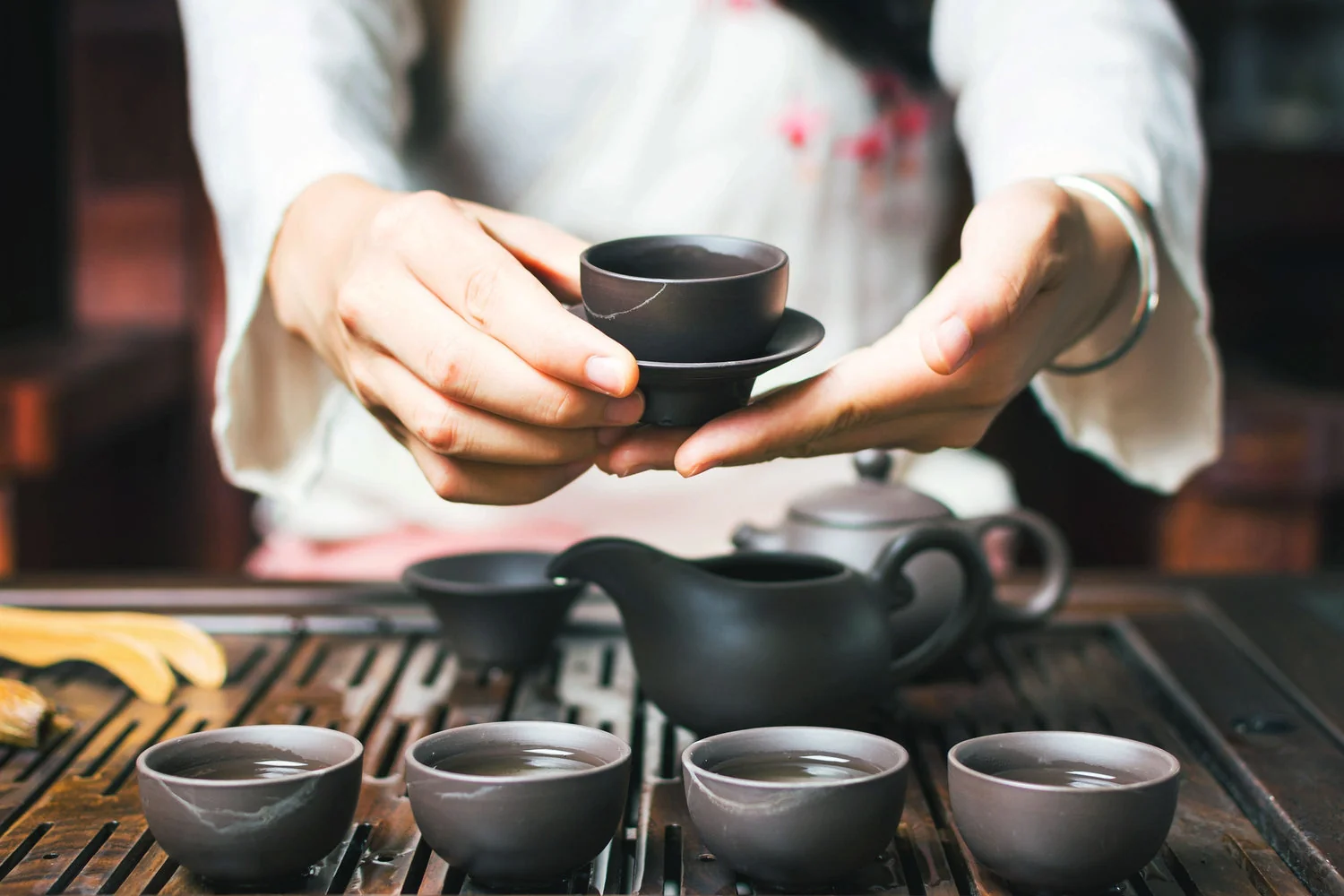
The Traditional Tea Ceremony (Gongfu Cha)
Equipment Needed Basic Steps 1. Warm the vessels: Pour hot water over all equipment 2. Measure the tea: Use about 5-8g per 150ml 3. Rinse the leaves: Quick first infusion, discard 4. First infusion: 15-30 seconds 5. Subsequent infusions: Add 5-10 seconds each time 6. Appreciate: Note the color, aroma, and taste
- Gaiwan (lidded bowl) or Yixing teapot
- Fair cup (pitcher)
- Tea cups
- Tea tray
- Tea tools (pick, scoop, funnel)
Where to Experience Tea Culture
Beijing Hangzhou Chengdu Fujian
- Maliandao Tea Street
- Traditional teahouses in hutongs
- Longjing Village tea plantations
- China National Tea Museum
- Traditional teahouses in People's Park
- Heming Teahouse
- Wuyi Mountain tea farms
- Anxi Tieguanyin region
Tea Etiquette Tips
1. Receiving tea: Tap two fingers on the table as thanks 2. Pouring: Fill cups only 70% full 3. Holding the cup: Use both hands for formal occasions 4. Refills: The host should refill before cups are empty 5. Compliments: Comment on the tea's qualities
Buying Tea in China
Tips for Avoiding Scams What to Look For
- Buy from reputable shops, not tourist traps
- Ask to taste before buying
- Be wary of "special" tea ceremonies near attractions
- Research fair prices beforehand
- Whole, intact leaves
- Fresh, pleasant aroma
- Consistent color
- Proper packaging with origin information
Experience Tea Culture with BetterChinaTrip
We can arrange authentic tea experiences as part of your China itinerary, from visiting tea plantations to private tea ceremonies with local masters. Contact us to learn more!
Frequently Asked Questions
- Can this plan be customized?
- Yes. BetterChinaTrip can adjust the route, guide language, pace, hotels, transport, and special interests before quoting. Page focus: Understanding Chinese Tea Culture: A Beginner's Guide.